Pages

Showing posts with label STP6 Teaching. Show all posts

Thursday, July 30, 2020

My Teaching Inquiry

My Inquiry question
Will an increased emphasis in a small group setting, on ‘concepts about print,’ basic sight words, letter sounds and vocabulary meaning, improve the oral language skills, and raise achievement in reading and writing for my priority learners?

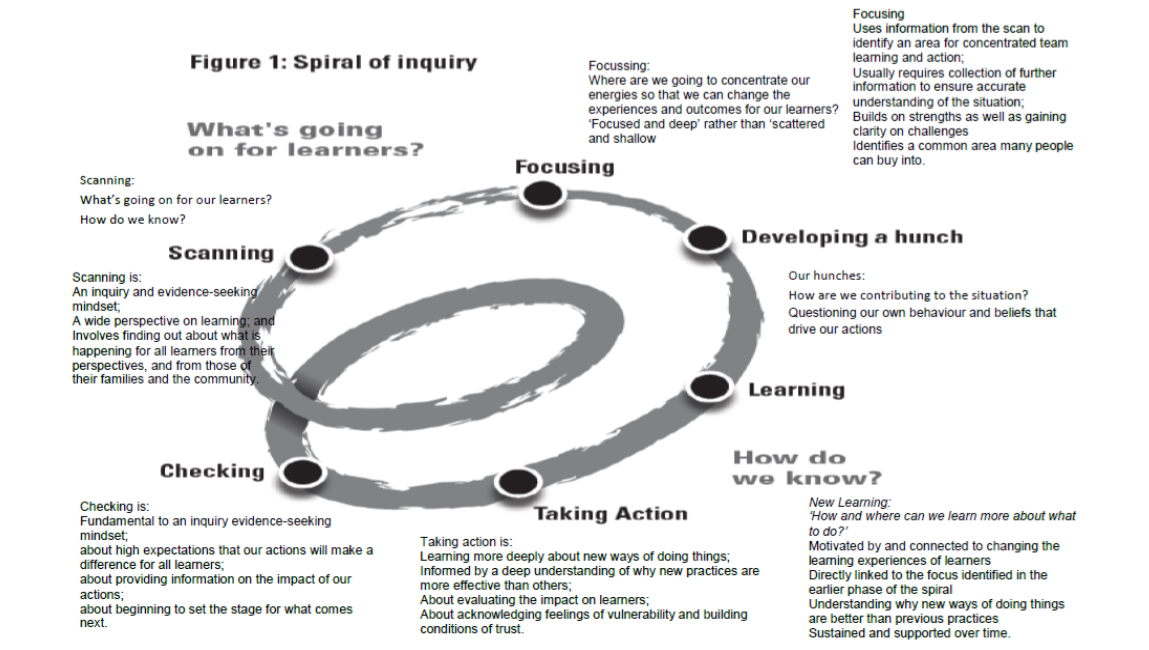
Scanning: What’s going on for my learners?

My priority learners: All children need language enrichment, vocabulary development and conversational skills. In a reduced class size after returning to school post Covid-19 lockdown it was noticeable that those priority students who had returned were more engaged and happy to give new learning a go than they had been in a full class situation prior to lockdown. Now that all students have returned they are finding it more difficult to engage and manage independent learning. They appeared to thrive in the smaller group with more 1 on 1 teacher support.

My observations [these are the same as for 2019] 

Students who are making slow progress in reading, writing and oral language :

  • have difficulty tuning in and noticing detail in what they hear and see

  • have difficulty distinguishing between letter-sounds

  • communicate with gestures only or incomplete sentences 

  • use incorrect grammar

  • have difficulty forming letter sounds which makes it hard for the listener to understand what is being said

  • have limited vocabulary which affects their understanding of what they are hearing and also makes reading for meaning difficult

  • make little or no connection between spoken ideas, reading and writing

  • do not understand terms like first, last, next

  • are slow to develop a memory for text

All of the above points impact on a healthy self-esteem and growth mindset required for learning. Based on these observations my inquiry question is:  

‘What strategies and resources can I use to increase/improve/develop the oral language skills, and raise achievement in reading and writing for my priority learners? I want to continue my 2019 inquiry in order to discover strategies to accelerate literacy learning for my students who have limited print awareness.‘  


Focusing: Marie Clay calls concepts about print “the rules of the road,” and writes, “teachers must teach so that all children become knowledgeable about these essential concepts so they open doors to literacy.”  I

‘Children who have print awareness can begin to understand the link between written and oral language. Children who lack print awareness are unlikely to become successful readers. Children's performance on print awareness tasks is a predictor of their future reading achievement.

https://www.readingrockets.org/article/print-awareness-introduction

Developing a hunch: 

  1. My priority students need to establish the concepts about print, develop an understanding about everyday words used in literacy teaching/learning [letter sound, first, last, next, start, finish, word, letter, sentence]. They need to have a larger bank of basic sight words and have instant recall when identifying letter sounds.

  2. Children need a language rich environment where they are constantly hunting for word knowledge and enriching their own vocabulary. 

  3. Children need to speak in whole, correctly structured  sentences and therefore a good basic sight word knowledge must be learned and used in everyday speech, reading and writing.


Baseline data: 

  • Oral language testing end 2019/Term 1 2020

  • Marie Clay Early Observation Survey results completed in students’ first six weeks of school.


Taking action: 

  1. For each child to increase their Oral Language test score by at least six months.

  2. For each student to improve their ‘Concepts about Print’ stanine . Concepts of print are important because they teach children how reading "works" (Holdgreve-Resendez, 2010a) . It can be viewed as the foundation to reading and writing. Concepts of print teach children at an early age how to orient themselves in terms of reading. Many times fluent readers can take concepts of print for granted, because they are second nature to the reader. These concepts are foreign to beginning readers (Stahl & McKenna, 2009).

  3. To practise concepts about print daily with weekly shared book, poem and instructional readers. Students will demonstrate and talk about their knowledge of  concepts.

  4. For each child to move on to the next colour set of Basic Sight Words (BSWs). Daily practice of reading and writing BSWs .

  5. To create an oral language page on our Te Whare Kiwi Junior Site,  jointly with the Te Pihi teachers who share our class site. The Oral Language page will include activities to help parents and children initiate interesting discussions. The page/slide on the site will be introduced in class on Mondays.

  6. Word Hunters: Add our class interest words to the site. 5 new words per week. Students are to tell parents the meaning of the words and use each word in a sentence. Words will be displayed in class and reviewed/referred to often in class during the week to check for understanding.

  7. Home  - school connections:  Communicate with parents of my students and explain that they are at risk in literacy, ask them to support learning at school by reading books sent home daily by the teacher, basic sight word learning and letter sound learning. The challenge will be to get the message across to the parents of my priority students, that everyday activities supported by interesting talk with lots of new vocabulary words, can play an important part in their children's language and literacy development.  https://www.readingrockets.org/article/early-literacy-policy-and-practice-preschool-years


The group of students will work in a group each morning with me, following a structured programme of :

  • letter sound learning starting with the vowels [reciting Letter Land alphabet, match sounds to characters and  written letters, collecting items beginning with the focus letter, cvc writing. Students to share their learning with the class on Fridays.

  • basic sight word learning [reading, identifying, matching, memory game, writing]. Basic sight words will be checked 2-3 times a week.

  • Concepts of print [using the week’s shared book]. Priority students to share their learning [re shared book] with the class during shared book reading

Sunday, May 31, 2020

Reflections on Distance Learning during Covid-19 Lockdown and Level 3.

During the Term 1 holidays which were brought forward due to the Covid-19 pandemic, I along with most teachers across New Zealand began planning with trepidation for an up-coming, indefinite period of distance learning with my new entrant class.

Why the trepidation you may well ask? My class Te Kakano did have an existing online learning site which they share with the next class up Te Pihi, however this was not fully utilised and students were just learning about handling devices and how to access and use some learning programmes. From the isolation of our homes the two teachers from Te Pihi and myself sort to create a site which would be easy to navigate as well as reflect the nature of our in-class learning. The three of us met through hangouts and conversed often as we organised and sorted out errors. It continued to be an eight week learning curve in which I applied knowledge gained throughout the Manaiakalani  Digital Fluency Intensive training and new skills I developed through online research and youtube videos. It was great to be able to have access to Manaiakalani Trust tutors who were invaluable with their help. Here is the link to the Te Whare Kiwi learning site.

Four or five days a week I made myself available to meet my students and their whanau via Google Hangouts. I enjoyed these times although student attendance varied from between 2 and 7. On an average only 4 students would attend despite numerous emails and messages to parents. We organised devices for students who didn't have them but this did not increase the rate of participation. Those students who had ongoing whanau support continued to grow their learning which is evident on their return to school. These students read the weekly PM online books chosen at appropriate levels and parents read the individual goals that had been set up for each child, and encouraged this learning.  The learning site worked well for these students only.

The Positives

Online learning provided
  • opportunity for learning to continue at home in a real life context
  • parents got the opportunity to be engaged with their children and see what they were learning
  • the opportunity to observes learning interests, strengths, weaknesses and progress, and to see where support was needed
  • me the opportunity to explore the possibilities of online teaching/learning, some of which can continue in the classroom to develop independence and student agency
  • me the opportunity to discover what works well and what doesn't with early learners

The Negatives

  • the frustrations of getting and staying connected with young learners. This required much communication with whanau, who for a variety of reasons had difficulty connecting regularly to class hangouts and supporting their tamariki with learning activities provided on the learning site.
  • On return to school a large gap is evident between those students who were being supported at home with online learning and those that weren't.  
  • Parents who never or rarely connected with online learning had problems with learning packs not arriving or the content being too difficult.

Moving Forward

  • Parent eduction around connecting and usage of class site to access learning. There is a need for parents to feel confident about connecting, navigating the class site and blog, and helping students with online learning.
  • Better use of the site to share and support in-class learning and home learning
  • Better use of the class blog to share learning on a regular basis


Wednesday, May 22, 2019

Teacher Appraisals Workshop - Moving on with 'Our Code' and 'Our Standards' 2019

Workshop aims:

  1. Review your use of the Code of Professional Responsibility and identify next steps
  2. Deepen your understanding of the Standards for the Teaching Profession 
  3. Share experiences and findings from goal, inquiry or standards focused appraisal
  4. Extend knowledge of effective use of of observation and conversations

What did I learn that could improve my confidence, capability or workflow as a professional?

  1. I gained a better perspective on the Code. It is the VALUES belonging to the teaching profession.
  2. Appraisal benefits learners, the appraisee, the appraiser, the school, whanau, the community and the teaching profession.
  3. Appraisal should be robust, evidence based, growth focused, goal oriented, accountable to the Standards and the Strategic plan, include self-appraisal
  4. The purpose of  Appraisal should be clear, involve trust and be focused on equity.
  5. That what evidence looks like for an appraisal is up to each school to decide.

Key understandings

  1. The Teaching Council will no longer ask teachers to send in evidence
  2. Teachers do not have to have a professional blog to share their evidence. Each school will decide on what constitutes evidence and how this is recorded.
  3. Teacher inquiry is mandatory as required by the NZC. How evidence of this is recorded is up to individual schools.
  4. An emphasis should be placed on professional conversations between appraiser and appraisee with a focus on teacher goals re. the inquiry.

Spiral of Inquiry

Quality Practice Template

The following template was shared with us as an example of an appraisal document. 

"This template is not for individual teachers to complete as an appraisal record! It should be 
completed with colleagues. It is about knowing the standards and having a shared understanding of what they look like at your school. It allows you to focus your appraisal attention around your goals or inquiry. Completing the Quality Practice Template together means you, together with colleagues identify the Standards as practices in your context. It makes it easier to see the naturally occurring evidence available for discussion/analysis."


There are templates available for each of the six Professional Standards on the Teachers Council Website https://teachingcouncil.nz/content/our-code-our-standards

What did I learn that could improve my confidence, capability or workflow in my personal life?

I think a streamlined, less time-consuming appraisal system would benefit all teachers. 

Friday, February 1, 2019

Creating High Expectation Schools

Professor Christine Rubie-Davies from the University of Auckland presented to the Manaiakalani Te Hiku cluster on 'Creating high expectation schools.' Teaching practices were outlined, that could improve the self-esteem of students. A main focus was finding alternatives to ability groupings within classroom programmes.  Student self-belief is affected by teacher expectations therefore what a teacher values and how a teacher interacts through non-verbal and verbal signals sends messages to students about their abilities.


Key reflections for teachers
  1. How do you form your expectations?
  2. What influences your expectations?
  3. What forms of evidence influence your expectations?

What have I learned that increased my understanding of high expectation learning?

1. Teacher expectations may influence learning support and emotional support.
      Examples:
  • differential learning support
  • differential emotional support
  • verbal behaviours
  • non-verbal behaviours
  • the leakage heirachy
2. Expectations may influence stereotyping and bias. The consequences can be:
  • reduced opportunity to learn
  • warm and supportive interactions
  • increased learning support
  • positive emotional support
  • challenging learning activities
  • expectations of success
3. Many factors contribute to the way teachers behave towards their students and the expectations they have for individual student achievement.

How will this  pedagogy EMPOWER me professionally with my teaching practice?

I want to ensure that ALL of my students feel empowered and have a positive self-belief that they are successful learners. I want to ensure I know what is going on for my learners and provide them with the opportunities to overcome any barriers to learning that are identified. 

Key messages about grouping

  1. Ability grouping may have limited or detrimental effect on student learning.
  2. Ability grouping may have limited or detrimental effect on student achievement.


Planning for change

How will you set up a high expectation classroom?

Demonstrate through my interactions with students that my expectations are high for all of them. My words, gestures, body language and flexible grouping/activities will reflect that my expectations are high for all students.

What differences will you make to the way in which your syndicate/department sets up instruction for reading/writing/maths? 

I will  intentionally have more mixed and flexible grouping across all curriculum areas to encourage self-belief, student agency and collaboration.

How will you ensure maximum opportunity to learn for all students in your syndicate/department? 

Provide the opportunities mentioned above and the necessary support for students to be able to do what is required.

What learning experiences will you include so all children are challenged?

Provide a variety of learning tasks that are scaffolded with different degrees of challenge [independent, some support required, step-by-step support]. Students will have choice about which learning tasks they complete. 
Link to the day's presentation:


Friday, January 18, 2019

Learning Through Play

Learning Through Play Foundation Workshop - 17/01/19
Learning Through Play: The Nitty Gritty - 18/01/19
The facilitator was Sarah Aiono, Director of Longworth Education Ltd
www.longwortheducation.co.nz

BACKGROUND

In 2019 the Junior classes at school are introducing more ‘learning through play’ into class programmes. We need to adjust and alter our programme in order to meet the diverse needs of our students. Teachers from the New Entrant and Year 1/2 classes have been reading about the positive effects of play-based learning environments. Over the past five years we have noticed a steady decline in the range of achievement levels in oral language, reading, writing and maths.

Many children entering school at five years of age, are simply not ready to begin formal lessons as we have had in the past.

What did I learn that increased my understanding of Learning Through Play pedagogy?

After attending two days of professional development in Kerikeri during the holidays, we see more clearly how this fits into the NZ curriculum and benefits the children in a variety of ways:
- helps to build problem solvers
- encourages curiosity and concentration
 - develops language and memory skills
 - improves academic learning                                                                                                    
Play is an ideal way for children to develop social, critical thinking and problem solving skills and  still retain literacy and numeracy as the main focus in the junior school.
A significant deterioration in the gross and fine motor skills of many children could be attributed to a lack of physical activity and outside play. Some children are unable to sit upright on the mat or at tables for long due to poor core strength. Some have very little upper body strength and cannot hang or climb without assistance. The lack of fine motor control means that children find it difficult to grip and control pencil, crayon and brush movements. Writing and handwriting is complex enough, without struggling to hold and manipulate the pencil. I learned about the characteristics of play as clarified by Sarah Aiono, and now see play with a new perspective.

The Characteristics of Play
Primarily, play is: 1. self-chosen and self-directed; 2. process rather than product driven; 3. contains structures or rules established by the players themselves; 4. imaginative, non-literal and removed from reality; 5. occurs between those who are active, alert and non-stressed. (Gray, 2013; Brewer, 2007)
Many children’s creativity and imagination is stifled due to limited opportunities to explore, discover, create and discuss. These are essential skills that the children will need to learn through inquiry, as they grow older and move on through the year levels.


How has the Learning Through Play pedagogy EMPOWERED me professionally with my teaching practice? 

We feel that due to the former National Standards constraints and timeline constrictions, we have been unable to cater for these escalating needs by giving children time to learn through play. Because some children are not ready for more formal learning activities/lessons, they show signs of anxiety which in turn causes additional barriers to learning for them. Understanding that from three years to seven years children are typically within the pre-operational cognitive stage means our school children in Years 1 to 3 (Level 1) are typically operating within this stage of development and therefore need learning experiences that cater for this. This perspective has inspired me to make changes in my teaching practice. I feel supported in the knowledge that the changes are suited to the developmental stage of the students.
The following slides from the 'Learning Through Play: The Nitty Gritty' workshop give an idea of the day's content. I highly recommend attending both the workshops if you are thinking about making changes to your learning programme in Years 1-3 particularly.
https://drive.google.com/open?id=1hRnXACinlujrfsWdqDtFlbYryy4eA4N2  

Recommended Reading to support a Play Based Teaching and Learning Journey: [Sarah Aiono]
Free to Learn by Peter Gray
The Best Schools by Thomas Armstrong
Creative Schools by Sir Ken Robinson & Lou Aronica
What’s the Point of School by Guy Claxton
New Zealand Publications:
Kelvin Smythe Blog:  https://networkonnet.wordpress.com/author/kelvinsmythe/
Elwyn Richardson and the early world of creative education in New Zealand: http://www.nzcer.org.nz/nzcerpress/elwyn-richardson

Online Video Material (You Tube):
Kathy Hirsch-Pasek
Scrap Store Playpod


Peter Gray 'The Decline of Play'
Sir Ken Robinson (TED) 'Do schools kill Creativity'

What did I learn that could be used with my learners?

I understand that we are at the beginning of our Learning Through Play journey which, we are  advised, can take five years.

Our plan for the first year is to provide resources which will cater to the schema or urges of the students
- increase the time allowed for Learning Through Play.
- provide resources (inside and out) to enable LTP.
- utilise our beautiful school grounds to develop more outside play 
  areas
  Sandpits - designed by children and teachers
  Tree climbing
  Hill rolling/sliding
  Digging/roading/science/geology
  Hut making in the bamboo and gardens/habitats
 Water play/moving water/volume
  Carpentry/measurement
  Potions table/science
  Creative play areas such as theatre/shop/vet clinic
  Art creations
  Covered outdoor play area within sight of junior classrooms
  Outdoor storage (wheelie bins or shed) for loose parts used in play
  e.g. pipes/reels/building materials

Literacy and numeracy will still be covered daily. Reading, writing and mathematics groups will be withdrawn and taught during LTP time. The timetable will need to be flexible to allow this.


Children will also still participate in all school-wide and timetabled events. Children will continue to be assessed and reported on as per usual.
Since attending the workshops we reported to the school Board of Trustees on our Professional Learning Development, and asked consent to begin by designing the sandpits with student input. We are grateful to our B.o.T. who totally support us in making changes to the class programmes and environmental alterations, and will provide the resourcing to make it all possible.

Sunday, September 9, 2018

Digital Fluency Week 7


What did I learn that increased my understanding of Manaiakalani kaupapa and pedagogy?

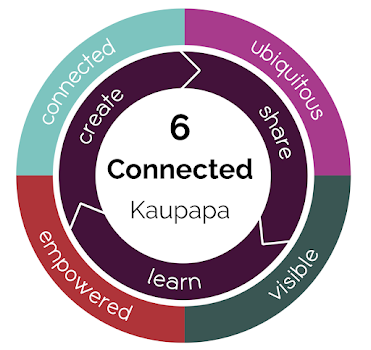
Today's focus was 'Being Connected.' Being connected empowers students. It takes their learning beyond themselves Being connected online means 'being visible' and involves being connected to whanau, to other schools, the local community, the nation and the wider world.

Manaikalani currently has 22,000 learners in it's network who are connected by a shared language and pedagogy. The programme design focuses on a different aspect of the Manaiakalani pedagogy each term. 
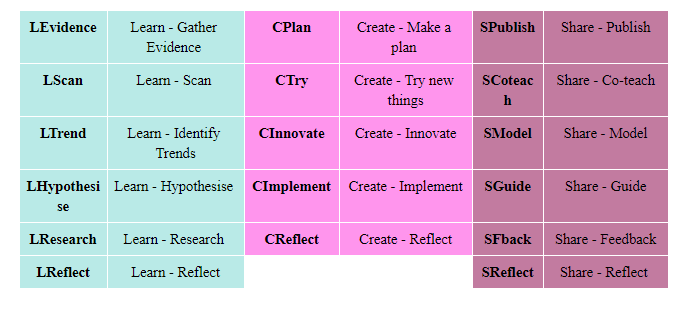
Term 1: Learn - setting up systems   Term 2: Create   Term 3: Share   Term 4: Learn, Create, Share 

Programme Design
A school's kaupapa, the year level of students and the teacher may influence this guideline but across the network each school will focus on the same design aspect

What did I learn that will increase my confidence, capability or work flow as a professional?

Being connected empowers teachers. Clarelle Carruthers encouraged us to take opportunities to learn from others i.e. 'Toolbox' sessions where we can discuss ideas, share and learn from each other. This can be done by developing a cluster website, a Twitter feed [students don't twitter], link to Twitter feeds from other Manaiakalani clusters and the Tuhi Mai Tuhi Atu Blog which connects to other classes.

I also came away from today's session feeling a lot more confident that I will be able to have visible, connected learning in my own classroom. I changed and earlier attempt at a class site applying the tips from Clarelle and Kerry about colour schemes and targeting the main users [my students]. I am so much happier with the look now. We also gave feedback via a Goggle Form to others on their website designs. I gathered tips from all of the sites and was so impressed with what my colleagues have designed and implemented.

What did I learn that I could use with my learners?
I have started designing Google Slides and projects using 'Explain Everything' for 'Letter Sounds' and 'Handwriting.' I intend to get this up and running and iron out any wrinkles before attempting another curriculum area. So the letter Zz project looks like this. I have not got everything up and connected yet but am happy that I am out of the starter blocks. The Zebra will connect to the letter z in the Letter Land programme which we have not purchased for the iPads yet. The E button will take students to letter-sound and handwriting activities. In EE I used the recording tool to say the W.A.L.T, the letter-sound, and word associated with pictures. This is a great tool to use for New Entrants that can't read. It was very easy to use.


What did I learn that could improve my confidence, capability and workflow in my personal life?

I know that I have the responsibility to introduce the use of Explain Everything to the other Junior Class teachers at my school. I need to be confident in the use of it myself. I've started the journey and have a plan. I have designed a site that will be used by both classes in our syndicate. I am confident that step-by-step, with time, experimenting, calling on help from the experts and having a bank of appropriate learning resources, digital learning will give me more time in my personal life.


Standards for the Teaching Profession

STP1
Te Tiriti o Waitangi Partnership
STP2
Professional Learning
STP3
Professional Relationships
STP4
Learning-focused Culture
STP5
Design for Learning
STP6
Teaching


Wednesday, September 5, 2018

Digital Fluency Week 6


 Manaiakalani Cyversmart

What did I learn that increased my understanding of Manaiakalani kaupapa and pedagogy?

Being Cybersmart was the initial focus for the day. A Cybersmart Curriculum supports the Manaikalani pedagogy. It needs to be specifically taught and revisited to enable students to be safe on on the internet. 
The categories are: Smart Learners, Smart Footprint and Smart Relationships, which link to the Learn, Create, Share philosophy of Manaiakalani.


Being Cybersmart empowers our learners as connected citizens. When their learning is visible and accessible, anytime, any place, at any pace, our young people learn to make smart decisions and understand that every time  they connect, collaborate and share online it combines to create their digital footprint.

Cybersmart clarity: Each component in the table above is broken down into key indicators. 

What did I learn that will increase my confidence, capability or work flow as a professional?

The focus today on Explain Everything for iPads was presented by Khismara Lal from Pt England school. Her extensive knowledge at using this app for 'Learn, Create, Share' for Yrs1-3 was obvious and I now have a clearer picture of how EE is used by the teacher and students. Her slide presentation is a helpful  introduction to using ipads in a junior class.


I will be referring back to this during the next months. Students access the class site on their ipads, click on the visible learning area buttons to access  their learning for the day. Further buttons lead the students to learning activities for the day/week. They use the different features of  EE to complete these activities. Here is the link to Khasmira's Class Site. Actually visiting the site and following the links helped me to see how my class site could function. I think once it is set up and streamlined to fit each group/individual, EE will make preparing for learning and teaching less time consuming and more manageable. Learning will be visible to students and activity instructions clearly explained within each project. EE has an easy voice recording system which can be used when setting up projects [perfect for New Entrants], and by the students to complete activities. There are lots of resources that other Manaiakalani teachers have created and shared. I will look at these once I can access them through an ipad as 'Explain Everything Reader is only available on Mac devices. Next step: to get New Era to make my google account accessible on one of the new ipads which I will keep for myself. I will also ask for a mac laptop from Tela next time I am eligible for a replacement. This should make the whole planing/creating/filing and sharing process more maneagable. 
My goals are: 

  1. create my class site
  2. learn how to create learning projects in EE
  3. learn what parts of a project is created in google slides and what is created in EE
  4. set up all iPads  the same - icons in the same folders, lock screen
  5. set up indivdual students' Google Accounts
  6. sign all iPads into individual learners’ Google Accounts (Google Drive, Chrome & Explain Everything)
  7. label iPads on the outside with learners’ name [will have to be inventive because adhesive stickers/tape etc won't stick]
  8. label individual Styluses with learner's names [styluses have been ordered]
Explain Everything downloads link


What did I learn that I could use with my learners?
I will need to continue using a structured approach to the 'Kawa of Care' of the ipad and using the various features of Explain Everything. This will involve the use of a stylus which we don't yet posses and also accessing the class website which is still in the design process.

What did I learn that could improve my confidence, capability and workflow in my personal life?

Knowing that I can access already completed resources rather than starting from scratch is a bonus that will be such a time saver. Working collaboratively and sharing resources within our school, Ka hui ako and wider afield will help strengthen networking and our profession. Working collaboratively within our local area will mean growing a bank of resources that are the authentic to our students. Having accessibility to a range of existing resources will also give me ideas for creating my own.

Wednesday, August 29, 2018

Digital Fluency Intensive Week 5

What did I learn that increased my understanding of Manaiakalani kaupapa and pedagogy?


Today's focus on Visible Learning hooked me in from the start. Visible teaching is empowering to students. When they can visibly see what their learning looks like for the week and where the learning is heading it provides them with support and gives them some ownership. The whole of the process should be visible - PLANNING which is embedded into your class site; PROCESS which are the learning tasks accessed and explained on the class site;  OUTCOMES - what students have learned/created/shared during the learning and how they went about this [method/collaboration];  ASSESSMENT using evidence of what students have done. 
There are no surprises for students and parents also have access to their child's personal learning blog and the class blog through a parent portal. 
Visible Teaching needs to be 'Accessible' - teachers are to make sure their sharing permissions are sorted so that it is 'Available' to their students. Visible Teaching has to be prepared in 'Advance.' 

Danni Stone from Pt England School shared insights into the benefits of 'Multi- Modal' learning. This is used as a hook to get students interested and keep them engaged both cognitively and behaviorally.
It is very important how teachers use the technology and how the learning is presented. Students need to be quickly engaged  [behavioural], then quickly move into the learning and then deeper learning. For example you can give students increasingly more complex text.The following video explains the effect of visible learning. Achievement data from Manaiakalani schools is collected by Woolf Fisher Researchers and analysed. 

Multi-Modal teaching/learning can be applied in blogs. This was compared to 'window dressing' in blogs and sites which has the aim of hooking viewers in to explore/inquire further. It can be used in the same way as a hook for teachers, parents and whanau.

Danni stressed that technology itself can be a hook when students first get to use devices. This wears off and it is the learning tasks themselves using a Multi-modal approach to engage, which strengthen learning and deepen understanding. 


What did I learn that will increase my confidence, capability or work flow as a professional?

I have not created a class site as yet, however we had the opportunity today to create a multi-modal gardening site for children. Click on the picture link to it. 
 Te Whare Tui Gardens with Science
I know that I will be able to add to this and use it in the future. The new Google Sites app is certainly more user friendly than the old Classic sites that I have used before and I am now more confident to attempt a class site as a portal to student learning.

What did I learn that I could use with my learners?

I saw how a class site can be used as the access to learning for students. At a click of a button they will be able to see what they have to do and how to do complete the task. I look forward to being able to manage my planning,  student/group activities,  formative assessment and collaborating with other teachers in my syndicate in this way. I am also looking forward to next weeks DFI when I'll learn how a class site links to Explain Everything on the iPad.

What did I learn that could improve my confidence, capability and workflow in my personal life?

Hopefully after the initial creation of my class site, learning how to use it effectively and teaching the students to use it in tandem with the ipads, my workflow will be improve. Having visible teaching and learning accessible to all stakeholders in one place is my goal.

Sunday, August 26, 2018

Digital Fluency Intensive Week 4

Due to the NZEI nation wide strike on the 15th August I did not attend this weeks DFI session. I found the whole strike-action experience positive in the Kaitaia area. The support from the community was wonderful. Parents and families joined us on our hikoi from Kaitaia Intermediate School,  car horns honked, people waved, students yelled out "we love teachers,"  business owners stood at their entrance ways with cheers and friendly affirmation and there was an overwhelming sense of unity among the teachers as they gathered together from different schools. The seriousness of the matter was not lost as we waved the placards and stood firm together declaring, "Kua te wa! It's time!"

And it is time for a change as teachers and principals struggle with a never ending succession of demands to meet student needs and M.o.E. requirements with inadequate resourcing.
We are currently stretched to our physical and mental limits. It is just too much!.

I for one love working with my students and work hard to provide the very best for them . . . and, every teacher I know has exactly the same attitude. What teachers want is for the profession to be respected, which includes an increase in salary that reflects the qualification and the workload/hours that are involved. Good teachers are leaving! Less teachers are training! If nothing happens soon, students will be in overcrowded classrooms with an increasing number of children who have a range of severe learning and behavioural issues for whom there is little or no support.


Before the Paparore School team joined forces with the other teachers at KIS, they picketed at Awanui. We had the same support as mentioned above. I must also mention that the local Bakerman Cafe served us delicious date scones, free of charge. The lovely gesture was accompanied with a, "thank you . . . we support you!"
Some of the Team joining forces with the teachers across New Zealand -  Thanks Donna Brydon [also part of the team] for the fantastic photo.  The rest of the team, Principal John Windleborn, Angela Windleborn and Venessa Davan, were supporting the cause on the opposite corner. Please note the pot of gold at the end of the rainbow 😉.

Although I was absent from this session I did work with Google sheets. If you would like an editable copy of the following Google Sheet email me.
Whole School Progress and Achievement Data