Pages

Showing posts with label Inquiry. Show all posts

Tuesday, September 21, 2021

My Teaching Inquiry 

What has gone well?

[Introduce/practise using algorithms in an everyday context to develop computational thinking.]

  • Most students think more carefully about solving a problem and can talk about ‘how’ they solved it.
  • Students were engaged throughout unplugged coding activities. All worked co-operatively in pairs and small groups.
  • Many students have improved their backward counting skills, 1 less/1more knowledge and strategies, left/right and forwards/backwards knowledge.

What has been a challenge?

  • Time restraints due to lock down.

  • Timetabling regular sessions.

  • JAM assessments revealed that a few students have rote-learned backwards counting from 10 but can’t count back from 20 using the ‘one less’ strategy.

  • Teacher involved supporting students in new learning and not taking photos for the class Blog.


What was an ‘aha’ moment with your students?

Students realising the need to be exact when completing unplugged coding activities i.e. understanding the problem to be solved, direction, careful counting, double-checking.

Where to next?

  • Continue using unplugged grids.
  • Introduce Bee bots.

Tuesday, August 17, 2021

 Computational Thinking - Unplugged Early Years

Last week Donna Golightly from 'Using Technology Better' has developed a site using the theme of Fairy Tales to support computational thinking.  I look forward to using the resources available through the following link. Fairy Tales  

The site has links to five well known Fairy Tales. Each Tale includes:
  1. links to curriculum areas
  2. computational thinking concepts
  3. activities
  4. literacy and/or maths focusses
  5. a digital technology focus
  6. sequencing images
  7. a grid mat
  8. assessment and reflection ideas.
This resource gives direction and structure for planning computational thinking units and could be adapted for different themes and learning levels.
We have also ordered a class set of Bee-Bots to with some plastic grids. 

Friday, June 4, 2021

 My Learning Inquiry 2021

My inquiry question


Will increased time spent developing computational thinking skills and specific vocabulary lead to a better understanding of number knowledge and strategies for my learners?

Our school-wide Professional Development this year is the 'Digital Technology Curriculum' with a focus on mathematics. Donna Golightly from 'Using Technology Better' will support teachers to use the DTC and technology better to improve student learning in maths. I have taken this opportunity to improve my knowledge of developing computational thinking in the classroom and use this as a basis in my inquiry.

Digital Technology Curriculum

What is happening in your class at the moment for this group of students? Students do not have a clear understanding of the relationship between counting and 1 less/1more. They confuse ‘before/after’ and often take a guess at a number rather than use a strategy. JAM assessment results show that students are not transferring forwards/backwards counting knowledge to 10, to bigger double digit numbers.


What strategies have you used? What do you see as your next steps in your inquiry?

We use daily calendar maths, class number knowledge warm-up sessions, games and numeracy group sessions to discuss our knowledge and understanding. Independent activities are completed in workbooks and using Math Seeds on the iPads.  

Next steps:

  • use EE - students take photos and record an explanation [practise using appropriate vocabulary to talk about their maths]. Recordings shared in maths groups.

  • Introduce/practise using algorithms in an everyday context to develop computational thinking.


How have you/ will you involve whanau during your inquiry process?

  • Share learning on our class blog

  • New vocab added to our take home vocab lists - students have to explain to their whanau what the words mean and/or use the words in a sentence.


Wednesday, March 31, 2021

Last week at staff meeting we discussed the Te Kāhui Tai Kura o Te Hiku Achievement Challenge 2021, in relationship to our own school vision and teacher inquiries for this year. As a school we have been discussing  our local environment, and our location within Ngaitakoto as being the platform for meaningful learning for our students. Our waiata, school pepeha, and pou have historical significance and provide connection to our locality and culture.  

Te Kāhui Tai Kura o Te Hiku Achievement Challenge 2021

Our shared vision: A genuine commitment is evident to removing barriers and forging partnerships connecting iwi, whānau, and kura under a shared purpose. We value the upholding of te ao Māori through te reo me ona tikanga Māori and are driven by thoughtful understanding of the principles of Te Tiriti o Waitangi. We will create a community that:

● puts our ākonga at the centre and is focussed explicitly on cultivating student agency and ownership

● develops ākonga who are confident in Te reo me ōna tikanga Māori .

● seeks to improve the hauora of our ākonga, both within our kura and our wider hapori

● develops resources that are localized, culturally relevant, and foster understanding of the histories, traditions and languages of Te Hiku o te Ika.

● ensures authentic collaboration and partnership around our shared goals and outcomes. That all involved feel respected, valued and listened to.

● develops quality kaiako and kaimahi who are culturally competent, relational, and highly capable in Te reo me ona tikanga Māori .

● ensures that the process of all mahi completed by the Kāhui Ako is informed by reflection and analysis.

Our aims- Kia tu tangata o Te Hiku o Te Ika

● Tu Tangata Ora: The physical, mental, spiritual and whānau wellbeing of ākonga are protected and nurtured.

● Tu Tangata Kaha: Ākonga have ownership of their learning and future direction through agentic participation in the learning process.

● Tu Tangata Marama: Ākonga are inspired to learn and engaged in quality learning experiences that are rich in the culture, environment and heritage of Te Hiku o Te Ika 


Thursday, July 30, 2020

My Teaching Inquiry

My Inquiry question
Will an increased emphasis in a small group setting, on ‘concepts about print,’ basic sight words, letter sounds and vocabulary meaning, improve the oral language skills, and raise achievement in reading and writing for my priority learners?

Scanning: What’s going on for my learners?

My priority learners: All children need language enrichment, vocabulary development and conversational skills. In a reduced class size after returning to school post Covid-19 lockdown it was noticeable that those priority students who had returned were more engaged and happy to give new learning a go than they had been in a full class situation prior to lockdown. Now that all students have returned they are finding it more difficult to engage and manage independent learning. They appeared to thrive in the smaller group with more 1 on 1 teacher support.

My observations [these are the same as for 2019] 

Students who are making slow progress in reading, writing and oral language :

  • have difficulty tuning in and noticing detail in what they hear and see

  • have difficulty distinguishing between letter-sounds

  • communicate with gestures only or incomplete sentences 

  • use incorrect grammar

  • have difficulty forming letter sounds which makes it hard for the listener to understand what is being said

  • have limited vocabulary which affects their understanding of what they are hearing and also makes reading for meaning difficult

  • make little or no connection between spoken ideas, reading and writing

  • do not understand terms like first, last, next

  • are slow to develop a memory for text

All of the above points impact on a healthy self-esteem and growth mindset required for learning. Based on these observations my inquiry question is:  

‘What strategies and resources can I use to increase/improve/develop the oral language skills, and raise achievement in reading and writing for my priority learners? I want to continue my 2019 inquiry in order to discover strategies to accelerate literacy learning for my students who have limited print awareness.‘  


Focusing: Marie Clay calls concepts about print “the rules of the road,” and writes, “teachers must teach so that all children become knowledgeable about these essential concepts so they open doors to literacy.”  I

‘Children who have print awareness can begin to understand the link between written and oral language. Children who lack print awareness are unlikely to become successful readers. Children's performance on print awareness tasks is a predictor of their future reading achievement.

https://www.readingrockets.org/article/print-awareness-introduction

Developing a hunch: 

  1. My priority students need to establish the concepts about print, develop an understanding about everyday words used in literacy teaching/learning [letter sound, first, last, next, start, finish, word, letter, sentence]. They need to have a larger bank of basic sight words and have instant recall when identifying letter sounds.

  2. Children need a language rich environment where they are constantly hunting for word knowledge and enriching their own vocabulary. 

  3. Children need to speak in whole, correctly structured  sentences and therefore a good basic sight word knowledge must be learned and used in everyday speech, reading and writing.


Baseline data: 

  • Oral language testing end 2019/Term 1 2020

  • Marie Clay Early Observation Survey results completed in students’ first six weeks of school.


Taking action: 

  1. For each child to increase their Oral Language test score by at least six months.

  2. For each student to improve their ‘Concepts about Print’ stanine . Concepts of print are important because they teach children how reading "works" (Holdgreve-Resendez, 2010a) . It can be viewed as the foundation to reading and writing. Concepts of print teach children at an early age how to orient themselves in terms of reading. Many times fluent readers can take concepts of print for granted, because they are second nature to the reader. These concepts are foreign to beginning readers (Stahl & McKenna, 2009).

  3. To practise concepts about print daily with weekly shared book, poem and instructional readers. Students will demonstrate and talk about their knowledge of  concepts.

  4. For each child to move on to the next colour set of Basic Sight Words (BSWs). Daily practice of reading and writing BSWs .

  5. To create an oral language page on our Te Whare Kiwi Junior Site,  jointly with the Te Pihi teachers who share our class site. The Oral Language page will include activities to help parents and children initiate interesting discussions. The page/slide on the site will be introduced in class on Mondays.

  6. Word Hunters: Add our class interest words to the site. 5 new words per week. Students are to tell parents the meaning of the words and use each word in a sentence. Words will be displayed in class and reviewed/referred to often in class during the week to check for understanding.

  7. Home  - school connections:  Communicate with parents of my students and explain that they are at risk in literacy, ask them to support learning at school by reading books sent home daily by the teacher, basic sight word learning and letter sound learning. The challenge will be to get the message across to the parents of my priority students, that everyday activities supported by interesting talk with lots of new vocabulary words, can play an important part in their children's language and literacy development.  https://www.readingrockets.org/article/early-literacy-policy-and-practice-preschool-years


The group of students will work in a group each morning with me, following a structured programme of :

  • letter sound learning starting with the vowels [reciting Letter Land alphabet, match sounds to characters and  written letters, collecting items beginning with the focus letter, cvc writing. Students to share their learning with the class on Fridays.

  • basic sight word learning [reading, identifying, matching, memory game, writing]. Basic sight words will be checked 2-3 times a week.

  • Concepts of print [using the week’s shared book]. Priority students to share their learning [re shared book] with the class during shared book reading

Friday, February 1, 2019

Creating High Expectation Schools

Professor Christine Rubie-Davies from the University of Auckland presented to the Manaiakalani Te Hiku cluster on 'Creating high expectation schools.' Teaching practices were outlined, that could improve the self-esteem of students. A main focus was finding alternatives to ability groupings within classroom programmes.  Student self-belief is affected by teacher expectations therefore what a teacher values and how a teacher interacts through non-verbal and verbal signals sends messages to students about their abilities.


Key reflections for teachers
  1. How do you form your expectations?
  2. What influences your expectations?
  3. What forms of evidence influence your expectations?

What have I learned that increased my understanding of high expectation learning?

1. Teacher expectations may influence learning support and emotional support.
      Examples:
  • differential learning support
  • differential emotional support
  • verbal behaviours
  • non-verbal behaviours
  • the leakage heirachy
2. Expectations may influence stereotyping and bias. The consequences can be:
  • reduced opportunity to learn
  • warm and supportive interactions
  • increased learning support
  • positive emotional support
  • challenging learning activities
  • expectations of success
3. Many factors contribute to the way teachers behave towards their students and the expectations they have for individual student achievement.

How will this  pedagogy EMPOWER me professionally with my teaching practice?

I want to ensure that ALL of my students feel empowered and have a positive self-belief that they are successful learners. I want to ensure I know what is going on for my learners and provide them with the opportunities to overcome any barriers to learning that are identified. 

Key messages about grouping

  1. Ability grouping may have limited or detrimental effect on student learning.
  2. Ability grouping may have limited or detrimental effect on student achievement.


Planning for change

How will you set up a high expectation classroom?

Demonstrate through my interactions with students that my expectations are high for all of them. My words, gestures, body language and flexible grouping/activities will reflect that my expectations are high for all students.

What differences will you make to the way in which your syndicate/department sets up instruction for reading/writing/maths? 

I will  intentionally have more mixed and flexible grouping across all curriculum areas to encourage self-belief, student agency and collaboration.

How will you ensure maximum opportunity to learn for all students in your syndicate/department? 

Provide the opportunities mentioned above and the necessary support for students to be able to do what is required.

What learning experiences will you include so all children are challenged?

Provide a variety of learning tasks that are scaffolded with different degrees of challenge [independent, some support required, step-by-step support]. Students will have choice about which learning tasks they complete. 
Link to the day's presentation:


Friday, June 29, 2018

Term 2 Manaiakalani Staff Meeting


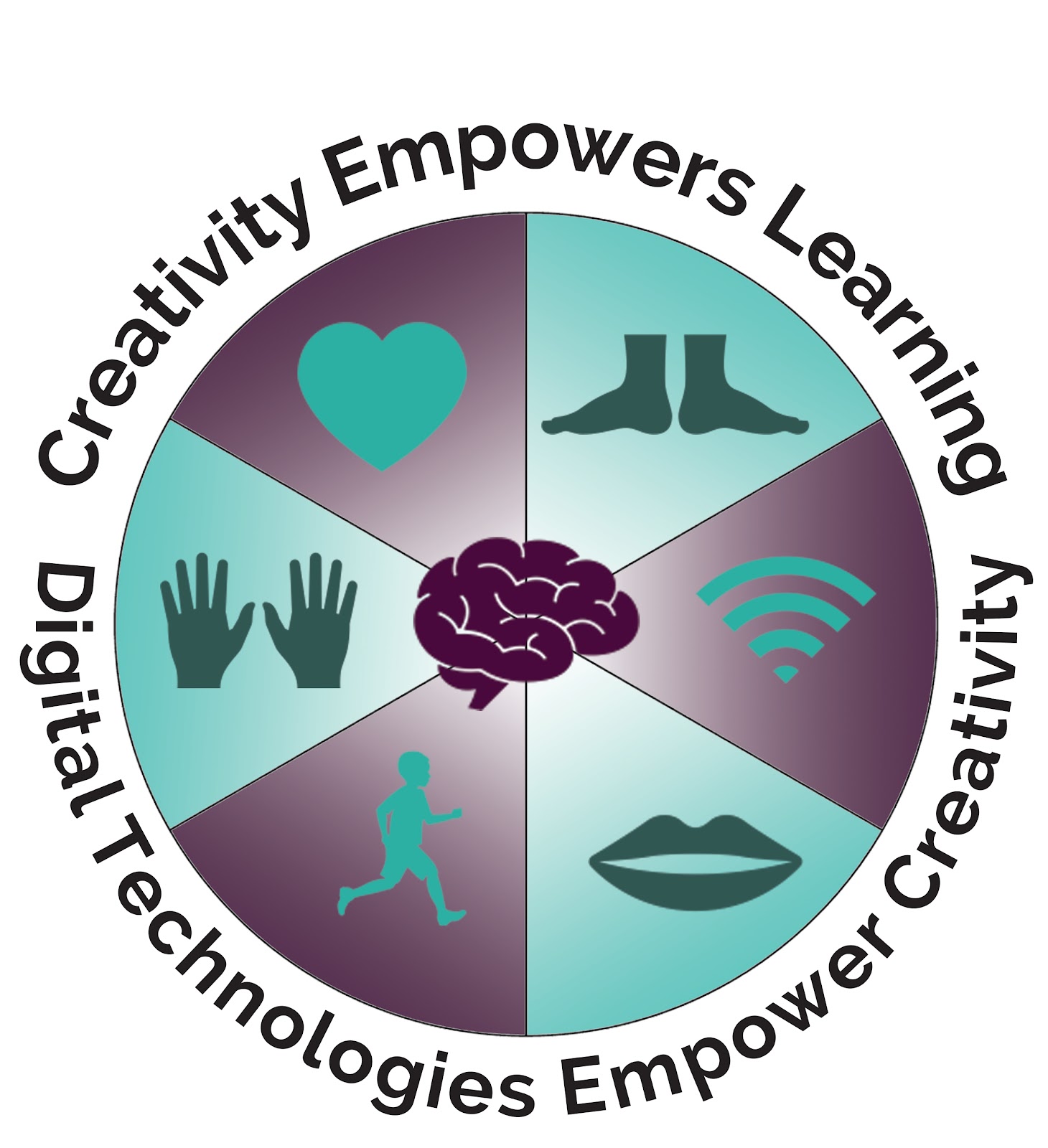
The emphasis was on CREATIVITY in the classroom. What creative experiences had we provided for our students this year? What had we as teachers created? Had we used technology to create? Creativity gives a real purpose for learning.

The image above reveals the different ways students are able to be creative: using vocals (singing, speaking etc), the whole body (dance, etc), hands, spiritual/wairua, feet, and with technology - which empowers the learning.

Creativity may be the process of learning, the hook into learning, and/or the end product.

I can see wonderful opportunities as I continue my digital learning journey through the Digital Fluency Intensive and for creating and sharing student learning using 'Explain Everything' with New Entrants during the next two terms. My personal journey into a blended digital classroom begins!  


"Creativity is now as important in education as literacy, and we need to treat it with the same status"